October 19, 2026
The Engineering Behind Modern High-Rise Concrete Construction
By Anthony Samango
The Engineering Behind Modern High-Rise Concrete Construction
Understanding What Holds a Building Together
When I look at a high-rise building, I think about what is happening beneath the surface. Most people see the finished exterior, the windows, and the height of the structure. As someone who has spent my career in concrete construction, I think about the structural system, the foundation, the concrete placement, the concrete frame, and the decisions that had to be made long before the building started taking shape.
My name is Anthony Samango III, and I am the President of Carson Concrete Corporation. My background in civil engineering, along with years of working in construction, has shaped how I approach a project. I have learned that building a high-rise is not simply a matter of following drawings. It requires careful planning, practical judgment, and an understanding of how individual decisions affect the entire structure.
Concrete is a major part of that process. It provides the strength and stability needed for many modern high-rise buildings, but getting it right requires more thought than people might expect.
The Engineering Starts Before the First Pour
A successful concrete project begins well before concrete arrives at the job site. Engineers and contractors have to understand the plans, review the structural requirements, and determine how the work will be completed in the field.
With a high-rise building, the margin for overlooking details can be small. The structure has to support its own weight, the people and equipment inside it, and the additional forces it will experience throughout its life. The foundation, columns, beams, slabs, and other structural components must work together as intended.
One question I always think about is whether the plans can be executed efficiently under actual job-site conditions. A design might look straightforward on paper, but construction introduces its own challenges. Access can be limited, materials have to arrive at the right time, and different trades need room to work without interfering with one another.
This is where the relationship between engineering and contracting becomes important. The drawings establish what needs to be built, while the construction team has to turn that design into a physical structure. That requires communication and attention to detail from the beginning. Carson Concrete is involved in many aspects of the project from the beginning to the last pour on the roof.
Why Concrete Placement Requires Careful Planning
Concrete construction depends heavily on timing and coordination. Once a pour begins, the team has to be prepared to carry out the work properly. Concrete cannot simply be treated like another material that can be set aside until everyone is ready.
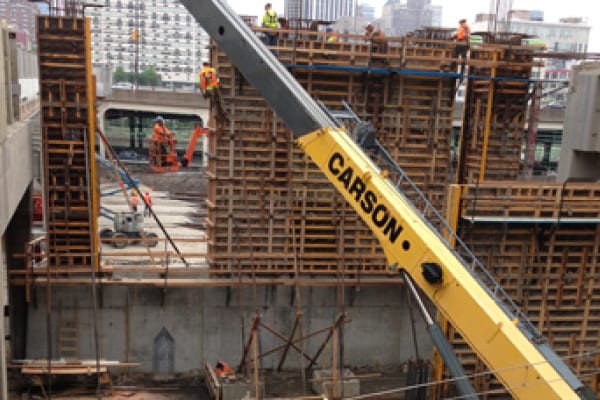
Before a major pour, there are several things to consider. The formwork must be ready, reinforcement needs to be placed properly, and the crew must understand the sequence of work. Equipment, deliveries, and site access also have to be coordinated.
I have seen how much preparation goes into large concrete projects. In 2004, Carson Concrete Corporation poured more than 60,000 yards of concrete for the new Phillies ballpark. A project of that scale requires coordination and a clear understanding of what needs to happen at each stage.
The important thing is not just moving a large amount of concrete. It is making sure the work is carried out according to the project requirements while maintaining quality and consistency.
There is always a balance between keeping a project moving and taking the time necessary to do the work correctly. Schedule matters, but rushing through a critical step can create problems that are much more difficult to address later. In my experience, good planning helps protect both the schedule and the finished structure.
The Difference Between the Drawings and the Job Site
Civil engineering provides the technical foundation for understanding how a structure should perform. Experience in construction adds another perspective because the work has to be completed under real conditions.
On a high-rise project, the contractor plans how the work is progressing from one level to the next. Structural components must be placed in the correct locations, and the work needs to follow the intended sequence. Small coordination issues can become larger problems when several trades depend on the same space or schedule.
When something happens that is not expected, the right response is to reevaluate, understand the issue, and communicate with the appropriate people. Guessing is not a substitute for resolving a construction question properly.
I believe this is one of the reasons practical experience matters in concrete contracting. Knowing what the drawings call for is essential, but understanding how crews work, how materials arrive, and how site conditions affect progress helps a contractor anticipate challenges.
It also requires knowing when to ask questions. No matter how long someone has worked in construction, there will be situations that require another review or a conversation with the engineering team.
Balancing Efficiency With Long-Term Performance
Construction projects operate under real financial and scheduling pressures. Owners want buildings completed on time, contractors need to manage costs, and everyone involved has responsibilities to fulfill. Safety is also a top priority.
Those pressures create tradeoffs. A construction team might be looking for a more efficient sequence of work or a way to reduce delays. Those are reasonable goals, but they have to be weighed against the structural requirements and quality standards of the project.
With concrete construction, the decisions made during the building process can affect how a structure performs for years. Proper reinforcement, suitable materials, and adherence to the approved design all contribute to the finished result.
I think it is important to consider the long-term purpose of a building rather than focus only on reaching the next milestone. A high-rise apartment building, hotel, or parking garage will serve people long after the construction crews have moved on to another project. The work needs to reflect that responsibility.
There is no single decision that guarantees a successful project. It is the combination of sound engineering, experienced contractors, careful supervision, and consistent execution that makes the difference.
Looking at High-Rise Construction From the Contractor's Perspective
After working in concrete construction for many years, I have come to appreciate how much coordination is required to make a complicated project look simple when it is finished. People see the completed building, but they do not necessarily see the planning meetings, site visits, material deliveries, inspections, and daily decisions that made it possible.
At Carson Concrete, my role involves understanding both the larger project and the details that keep the work moving. That means staying connected to job-site conditions while also managing the responsibilities that come with running a construction company.
Modern high-rise construction continues to demand a combination of engineering knowledge and practical experience. New designs and building requirements may introduce different challenges, but the basic responsibilities remain the same: understand the structure, plan the work carefully, communicate clearly, and maintain the standards the project requires.
For me, that is what good concrete construction comes down to. The finished building may be what people notice, but the real work begins long before it rises above the street. Getting those early decisions right is what gives a structure the foundation it needs to serve its purpose for years to come.