October 19, 2026
Why Experience on a Construction Site Matters in Executive Leadership
By Anthony Samango
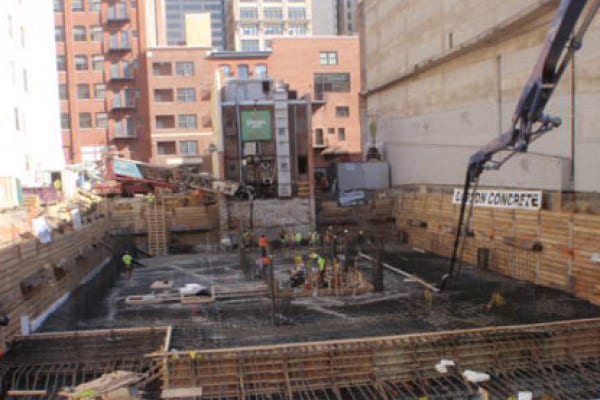
Learning the Work From the Ground Up
I spent my early years learning about construction, watching how things were done, and getting a sense of what it took to complete a job properly. Those experiences gave me a foundation that has stayed with me throughout my career.
Today, as President of Carson Concrete, I see the value of that experience in a different way. Managing a construction company involves more than reviewing schedules, overseeing budgets, insurance, estimates, and making many decisions. Those decisions are important for the people responsible for carrying out the work.
When I consider a project, I think about what is happening on the job site. Are the crews prepared for the next stage? Are materials arriving when they are needed? Are there conditions that could affect the schedule? These questions matter because the answers can influence the entire project.
Experience does not mean you will always know the right answer immediately. It means you have a better understanding of what to look for and which questions need to be asked.
Understanding What Happens Beyond the Office
There is a difference between knowing a project is behind schedule and understanding why it is behind schedule.
On a concrete construction project, delays can come from a number of places. Materials might not arrive as planned, site conditions may create unexpected difficulties, or one stage of construction may depend on another trade finishing its work first. Sometimes an issue that appears minor on paper can have a much larger effect on the job site.
Having worked in construction for years, I understand that the people carrying out the work are dealing with these realities every day. When a problem comes up, it is important to understand the circumstances before deciding how to respond.
That is one reason I believe executives in construction should stay connected to their projects. You cannot manage every detail personally, and you should not try to replace the expertise of the people responsible for individual tasks. However, visiting job sites daily and speaking with the superintendents can help you recognize problems earlier and make decisions based on what is actually happening.
I make a point of visiting our job sites as part of my moring before spending the rest of the day in the office. Those visits help me stay connected to the work and maintain a practical understanding of our projects.
Making Better Decisions Through Practical Experience
In concrete construction, decisions often involve balancing several priorities. A project needs to stay on schedule, costs have to be managed, and the work must meet the required specifications and quality standards.
Those priorities do not always fit together neatly. A change that appears to save time might create a coordination problem somewhere else. Moving through one stage could affect the preparation needed for the next. The challenge is to consider how one decision will affect the rest of the project.
My background in civil engineering at Tulane University helps me understand the technical side of construction, while my years of hands-on experience give me another perspective. Both are very important.
Engineering provides a framework for understanding how a structure is designed to perform. Construction experience helps one appreciate the practical steps required to build it. When those perspectives come together, it becomes easier to evaluate a situation and have productive conversations with the people involved.
I also believe it is important to recognize the limits of your own knowledge. An executive does not need to have every answer. Sometimes the best decision is to ask the project team for more information, consult the design team, or take another look at the schedule before committing to a solution.
In my experience, making a careful decision is often more valuable than making a quick one simply to move a conversation forward.
Communication Starts With Understanding the Work
Construction depends on communication between people with different responsibilities. Engineers, project managers, subcontractors, suppliers, and field crews all contribute to getting a project completed.
When everyone understands the requirements and the sequence of work, it becomes easier to coordinate activities and address concerns. When communication breaks down, misunderstandings can lead to delays, unnecessary costs, or work that needs to be corrected.
Having spent a lot of time on construction sites helps me understand the kinds of information people need to do their jobs. It also reminds me that a decision made in an office can have direct consequences for a crew working in the field.
I try to approach these conversations with the understanding that the people closest to a problem may have useful information that is not immediately visible to someone else. Listening to them is part of making an informed decision.
That does not mean every suggestion can be followed or every disagreement can be avoided. Construction projects involve competing needs, and decisions sometimes have to be made when there is no perfect option. What matters is that people understand the reasoning behind those decisions and know what is expected of them.
Lessons From Large-Scale Concrete Projects
Throughout my career at Carson Concrete, I have been involved in projects that required substantial planning and coordination. One example was our work on the new Phillies ballpark in 2004, where we poured more than 60,000 yards of concrete.
A project of that size requires more than the ability to handle a large volume of material. It takes coordination across different stages of construction, careful scheduling, and a clear understanding of how the work fits into the overall project.
Experiences like that reinforce the importance of preparation. The larger and more complicated a project becomes, the more important it is to understand the details while keeping the broader objective in mind.
The same principle applies to high-rise apartments, condominiums, hotels, and parking garages. Each project has its own requirements, and no two job sites are exactly alike. A contractor has to understand the specific challenges involved rather than assume that an approach that worked somewhere else will automatically work again.
For an executive, this means staying involved enough to understand the project's needs without losing sight of the company as a whole.
Leadership Is About Knowing What Your Decisions Mean
After spending most of my life in construction, I have come to believe that effective leadership depends on a combination of knowledge, experience, and judgment. Titles and responsibilities change as a career develops, but the work still comes down to people solving problems and building something that needs to perform as intended.
My experience in construction continues to influence how I approach my responsibilities as President of Carson Concrete. It reminds me to consider the practical consequences of decisions, listen to the people doing the work, and understand the challenges a project presents before deciding on a course of action.
There is always more to learn in this industry. New projects bring different conditions, different requirements, and new questions to work through. Experience helps, but it should never become a reason to stop asking questions or listening to others.
For me, the value of construction experience in executive leadership is straightforward. It helps connect decisions made at the top of a company with the realities of the job site. When leaders understand that connection, they are better positioned to support their teams, manage challenges, and deliver work that meets the expectations of the people depending on it.